Vignesh Jeyaraman

I build things I shouldn't be able to build alone.

I've always had ideas for things I wanted to build. I just couldn't code. AI changed that — intelligence on demand turned years of backlogged ideas into weekends of building. This site is what happens when nothing is stopping you anymore.

What I'm Building

Everything below started as a personal problem or a curiosity — none of it was built to be commercial.

alfred(again)

A domain-agnostic multi-agent orchestration framework

$pip install alfredagain
Deep dive →

Problem

Most agent frameworks demo well but break in production. I wanted to build one that actually works — where you can plug in any domain and the agents know how to read, write, and reason about it without custom wiring every time.

Built

A five-agent orchestration engine on LangGraph, published on PyPI as alfredagain. You define your domain once — what data exists, how it connects, what the agents are allowed to do — and the framework handles the rest. 164 tests. Three validated domains: Kitchen (daily use), FPL (analytics), and CRM (enterprise consulting).

Learned

That the hardest problem in orchestration isn't the agents — it's the state. LLMs are nondeterministic, so everything around them has to be predictable. And that a good abstraction boundary is one you don't have to explain twice.

Act Quick

Fast Path

Simple reads bypass Think and Act entirely

Understand

Memory Manager

Routes to: Act Quick, Think, or Reply

Think

Planner

Routes to: Act, or Reply directly

Act

Executor

Multi-tool loop

Reply

Formatter

All paths converge here

Summarize

Historian
Quick readUnderstand → Act Quick → Reply
ClarificationUnderstand → Reply
ProposeUnderstand → Think → Reply
Full planUnderstand → Think → Act → Reply

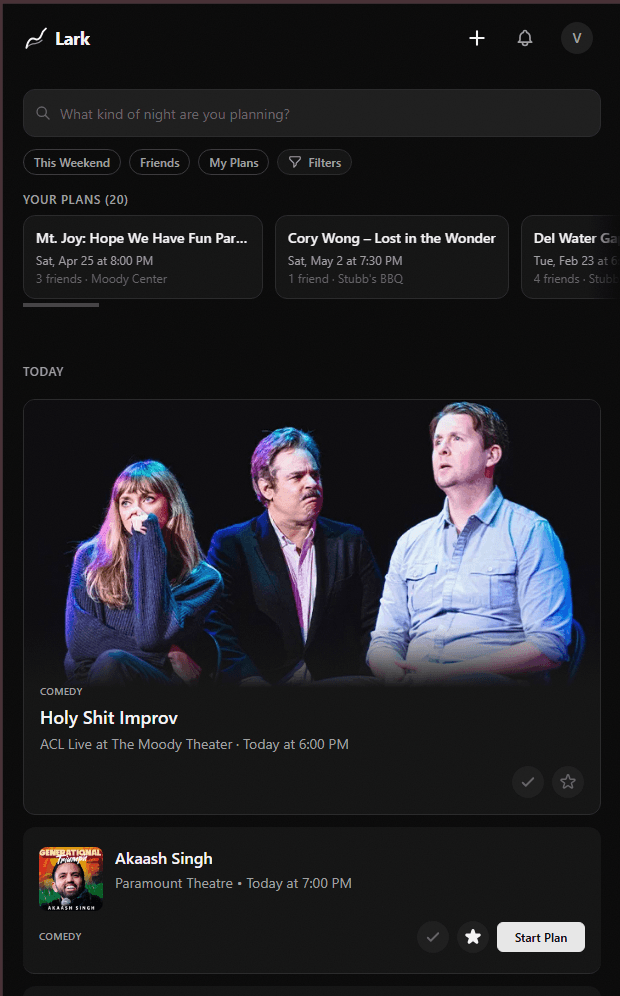
Lark (RIP ryesvp)

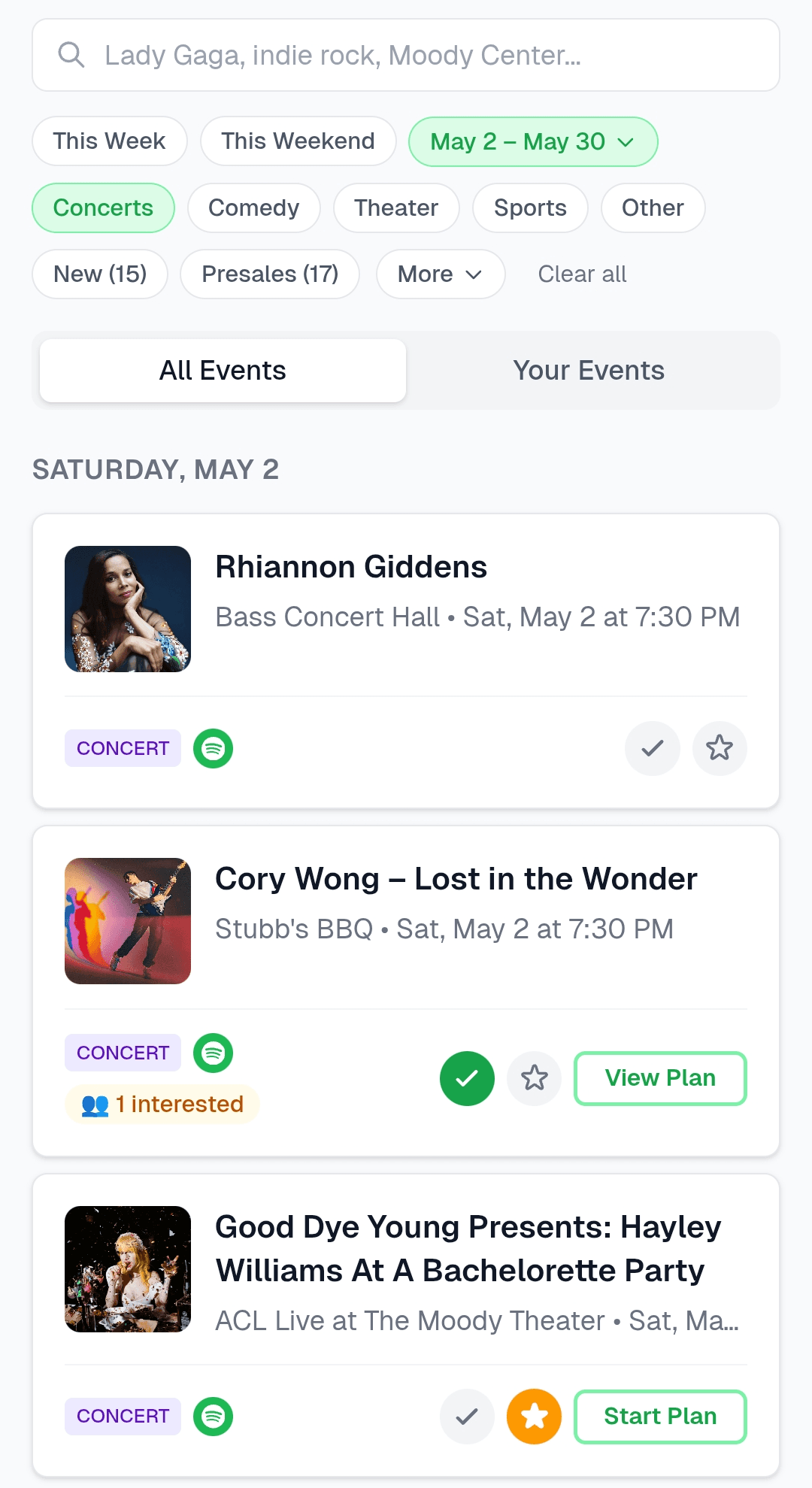
Social events, rebuilt from scratch

Problem

I go to 100+ shows a year. There's no good way to find out if your friends are interested in the same ones — so I built one.

Built

A social events platform where you follow venues and friends, see what's happening, and make plans together. Auth, social feeds, event discovery, RSVP — the full stack. Then I rebuilt it from scratch: an LLM enrichment pipeline that scrapes raw event data nightly and uses GPT-4o-mini to categorize events, extract performers, and direct targeted Spotify and Knowledge Graph lookups. Claude Code enforces design consistency through a four-agent pipeline and ten specialized skills.

Learned

How to build auth and social feeds from zero. How much UX matters when real people use your app. And that rebuilding something from scratch — with a real design system and an LLM pipeline — teaches you more than building it the first time.

Check out the redesign!Drag to compare
Lark event feed — dark monochrome design
RYSVP event feed — light mode with green accents
ryesvpLark

Alfred — Pantry

My kitchen runs on this

Problem

I was spending hundreds on Uber Eats, watching herbs go bad, and eating the same reheated meal three days in a row. Cooking something for 30 minutes and it not being tasty is a waste of time, money, and emotional bandwidth.

Built

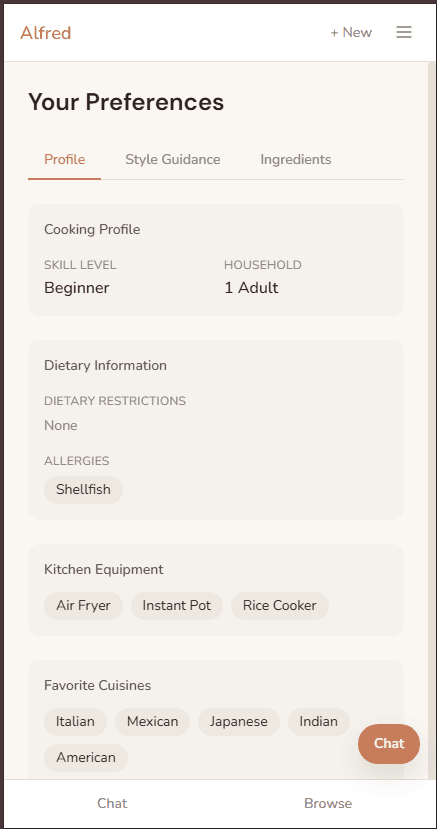
A kitchen assistant that actually knows me. Through onboarding it learns my cooking days, cuisine preferences, skill level, and equipment. Full planning mode goes from pantry inventory to a week of meals — with prep lists and shopping lists generated automatically. Cooking mode for live sessions: timing, temperatures, substitutions, without touching persistent memory. Brainstorm mode for riffing on new ideas. A recipe importer that works across 400+ sites. An @ tagging system to pull in recipes and ingredients without bloating context. A 2,500-ingredient database with fuzzy and semantic matching for substitutions.

Learned

That the hardest part of a kitchen assistant isn't the AI — it's the data model. Ingredient normalization across thousands of recipes, inventory tracking that stays useful, and mode isolation so a quick 'what temp for the chicken?' doesn't derail your meal plan. This app is what made me realize the framework underneath was more abstract than a personal assistant — and that's what became Alfred.

From pantry to plate
Alfred onboarding — tell me about your kitchen

trackviewer

Hardware meets software

Problem

I wanted my record player to show what's playing and generate visuals in real time. No reason other than it would be cool.

Built

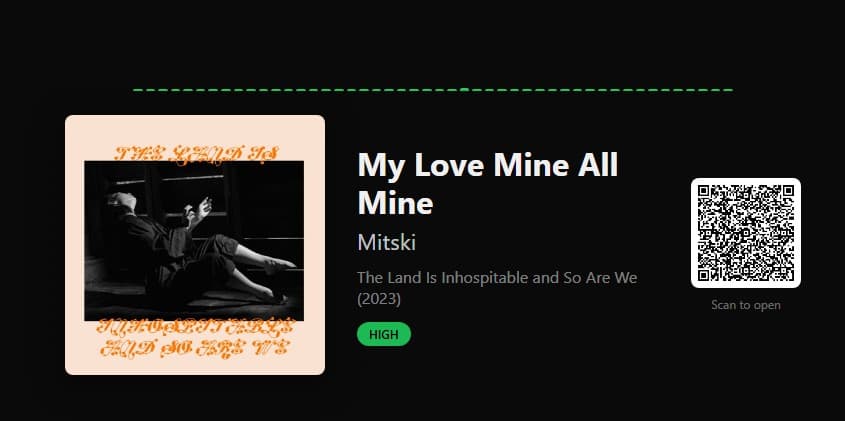
A Raspberry Pi-powered audio fingerprinting and visualization system.

Learned

Debugging hardware with an AI pair programmer is a uniquely humbling experience. Also that the best projects start with "no reason other than it would be cool."

Screenshot of trackviewer

vignesh.ai

This site

Problem

I've never had a personal brand. Never needed one. But I'd also never built a website, defined a design system, or orchestrated a multi-agent frontend build.

Built

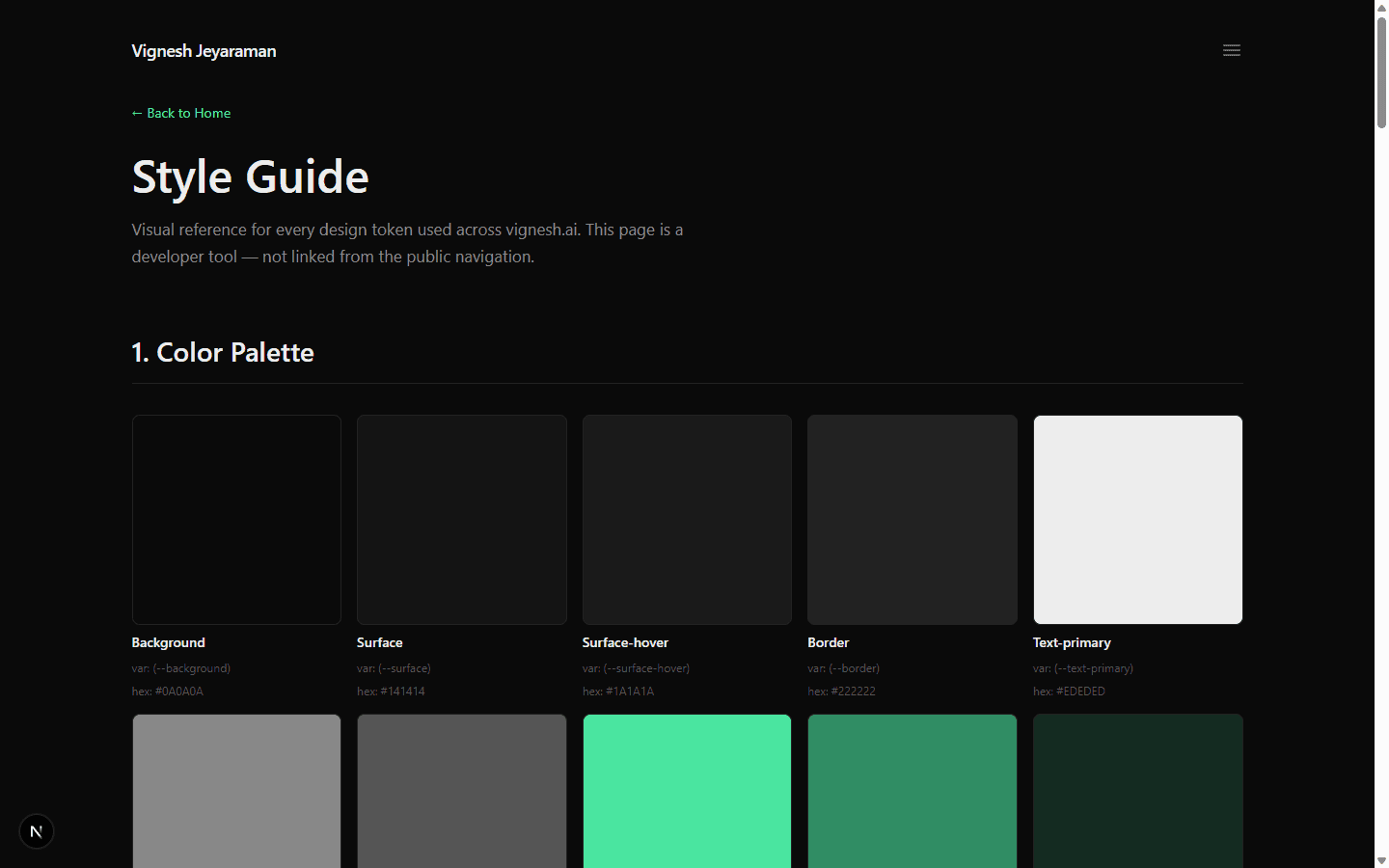
The site you're looking at — dark mode, responsive, designed and shipped in a day using a four-agent Claude Code pipeline: design director, motion choreographer, page builder, and QA reviewer.

Learned

Design orchestration with AI agents, Playwright MCP for visual testing, devtools integration, and that defining a design system is the same muscle as scoping a product requirements doc.

Screenshot of vignesh.ai

fplpundit

In Dev — Parked

Fantasy Premier League, but with a BI team

Problem

I've played FPL for 10+ years. There's no shortage of data — 775 players, 38 gameweeks, hundreds of stats — but you can't just dump all of it into an LLM and hope for insight. I needed agents that could actually crunch numbers, not just summarize them.

Building

A BI layer on top of Alfred where agents act as data analysts. Instead of stuffing data into context, they write and execute Python in a sandbox — pandas for analysis, matplotlib for charts. Six domains unlocked: squad planning, player scouting, transfer market, mini-league rivalries, live gameweek tracking, and fixture analysis. I'd solved analysis — so I pushed further: if agents can crunch numbers, why can't they generate visualizations on demand? I spent years working alongside BI teams and wanted to prove that data viz on demand wasn't a pipe dream.

Will prove

Where the real line is between what LLMs are good at — reasoning, intent, formatting — and what they struggle with: math on 30,000 rows. Letting agents delegate computation to Python and keep interpretation for themselves is what makes the whole framework click.